Email & SMS as a Profit Multiplier for Paid Media
Learn how email and SMS marketing for ecommerce increase retention, improve ROAS, and turn paid traffic into long-term revenue.


Paid media drives traffic. Owned media determines whether that traffic becomes profit.
Most ecommerce brands invest heavily in acquisition while underutilizing email and SMS. This creates a gap between revenue and profitability. Paid campaigns generate clicks and first-time purchases, but without a structured retention system, customer value remains limited.
This model forces brands to continuously spend to maintain performance. Each new sale depends on another paid interaction. Over time, rising acquisition costs and platform volatility reduce efficiency.
Email and SMS marketing for ecommerce change that model. They allow brands to capture and extend the value of every customer acquired through paid media. Instead of relying on one transaction, brands build repeat purchasing behavior and long-term revenue.
Owned media channels provide direct access to the customer. There is no auction, no algorithm dependency, and no incremental cost per impression. This makes them one of the highest-margin revenue drivers available.
When properly integrated, owned media does not operate as a separate channel. It acts as a multiplier for paid media performance.
Quick Takeaways
- Email and SMS marketing for ecommerce increase the return on paid acquisition by driving repeat purchases
- A strong email SMS retention strategy improves customer lifetime value and reduces dependency on ad spend
- Post purchase email flows and SMS sequences are critical for converting first-time buyers into repeat customers
- Owned media channels provide higher margin revenue compared to paid media alone
- Brands that align paid media with retention systems scale more efficiently and profitably
Why Paid Media Alone Limits Profitability
Paid media performance is typically evaluated using metrics such as ROAS, cost per acquisition, and conversion rate. These metrics provide insight into campaign efficiency, but they do not reflect total business performance.
A campaign can deliver strong front-end results while still producing low overall profit. This happens when customer value is limited to a single purchase.
Without retention systems, brands operate on a linear model:
- Spend to acquire a customer
- Generate a single transaction
- Repeat the process to maintain revenue
This structure creates several challenges. Acquisition costs increase over time. Margins become compressed. Growth depends entirely on continued spend.
Email and SMS introduce a compounding effect. They allow brands to generate additional revenue from the same customer without additional acquisition cost.
This shift changes how paid media should be evaluated. Instead of focusing only on first-purchase ROAS, brands can consider total revenue generated per customer over time.
As a result, brands can:
- Recover acquisition costs more quickly
- Increase average order frequency
- Improve overall marketing efficiency
How Email and SMS Multiply Paid Media Performance
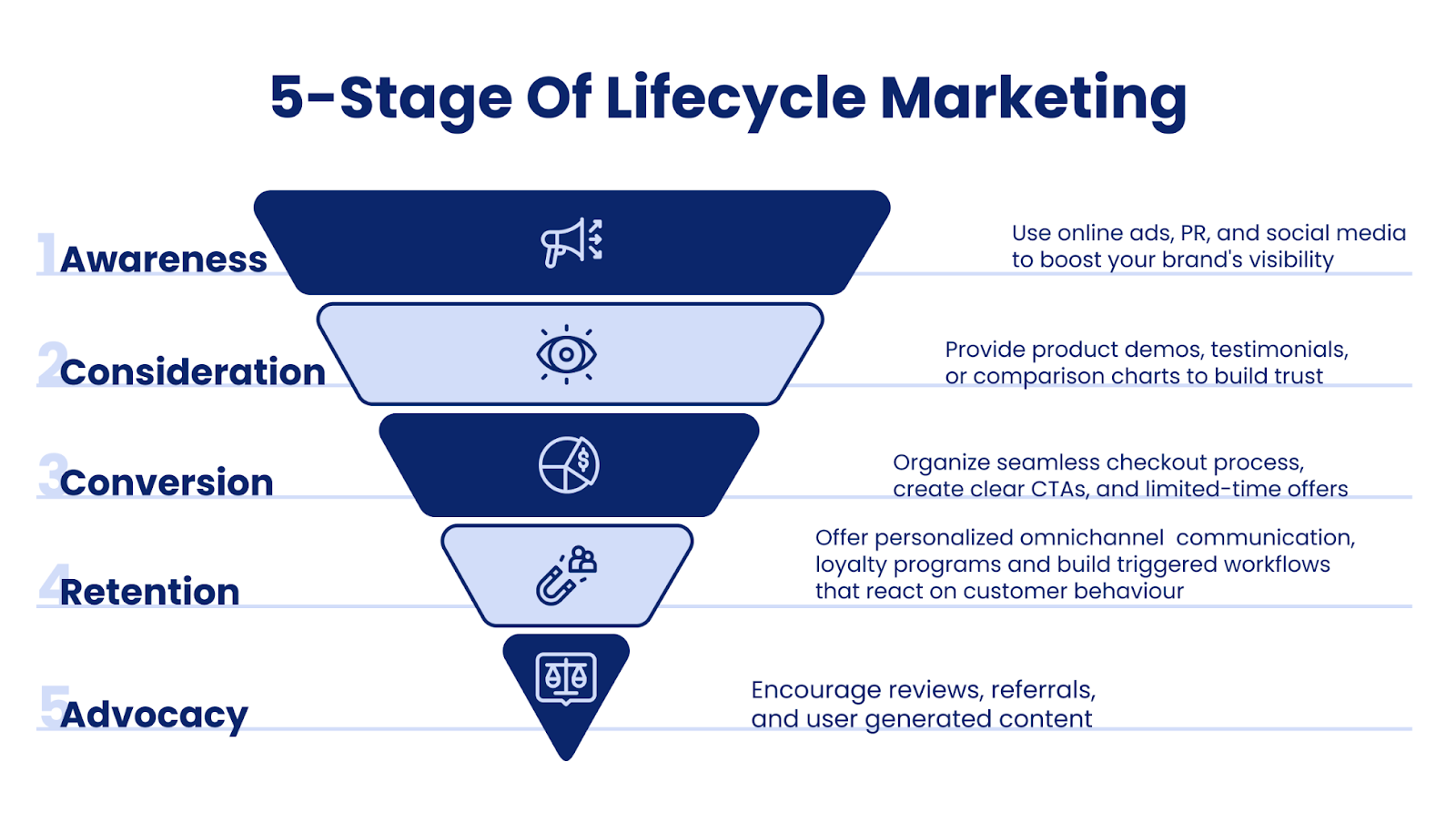
Email and SMS marketing for ecommerce extend the lifecycle of every customer acquired through paid channels. Once a user converts, owned media takes over.
This transition is where profitability is built.
Post-Purchase Email Flows
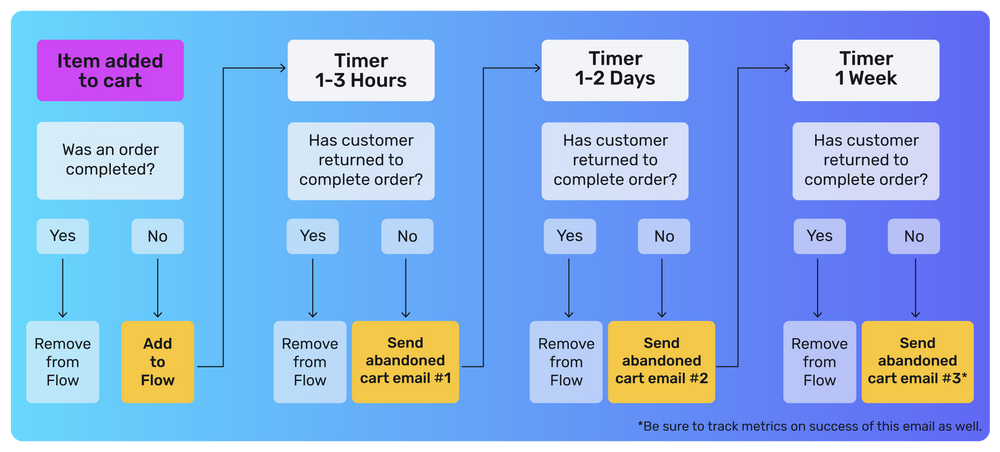
Post purchase email flows are one of the most important components of a retention system. They guide customers immediately after conversion and set the foundation for future purchases.
These flows typically include:
- Order confirmation and shipping updates
- Product education and usage guidance
- Cross-sell or complementary product recommendations
Well-structured post purchase email flows reduce friction, build trust, and increase engagement. They also introduce additional purchase opportunities at a time when customer intent is still high.
The goal is to move the customer from a first purchase to a second purchase as efficiently as possible. This transition has a direct impact on lifetime value.
SMS for Immediate Engagement
SMS supports high-visibility communication with minimal delay. Messages are delivered directly to the customer and are typically read quickly.
This makes SMS effective for:
- Order updates and confirmations
- Time-sensitive promotions
- Cart and browse abandonment reminders
SMS captures demand in moments where timing matters. It reduces missed opportunities and supports higher conversion rates for key actions.
Because of its immediacy, SMS works best when paired with email. Email provides depth and structure, while SMS provides speed and visibility.
Retention and Lifecycle Campaigns
A structured email SMS retention strategy extends engagement beyond the initial purchase window. This includes ongoing communication based on customer behavior and lifecycle stage.
Common retention campaigns include:
- Replenishment reminders based on product usage
- Win-back campaigns for inactive customers
- Loyalty and VIP messaging for high-value segments
These campaigns maintain consistent customer interaction without relying on paid channels. Over time, they increase purchase frequency and strengthen customer relationships.
Aligning Paid Media with Retention Systems
The highest-performing ecommerce brands do not treat paid media and owned media as separate efforts. They operate as a single system designed to maximize customer value.
Paid media drives acquisition. Email and SMS capture and expand that value.
To align both effectively, brands should focus on:
- Capturing all paid traffic into email and SMS lists at the point of conversion
- Structuring flows based on lifecycle stages rather than fixed timelines
- Segmenting customers by behavior, purchase history, and engagement level
- Coordinating messaging across channels to maintain consistency
This approach ensures that every customer acquired through paid media enters a structured retention path. It also reduces reliance on continuous acquisition spend.
When alignment is strong, paid media performance improves because each customer generates more total revenue.
Measuring the Impact on Profit
Understanding the impact of email and SMS requires a shift in measurement. Channel-level metrics alone do not capture their full value.
Brands should evaluate performance using metrics tied to long-term revenue and efficiency.
Key indicators include:
- Customer lifetime value
- Repeat purchase rate
- Revenue per subscriber
- Time to second purchase
These metrics provide a clearer view of how owned media contributes to profitability.
For example, an increase in repeat purchase rate reduces the need for new customer acquisition. A shorter time to second purchase improves cash flow and accelerates return on ad spend.
When these metrics improve, paid media becomes more efficient. The same acquisition investment produces more total revenue.
Building a Sustainable Growth Model
Email and SMS marketing for ecommerce support a more stable and scalable growth model.
Instead of relying entirely on paid acquisition, brands create a system where revenue is generated across multiple touchpoints. This reduces exposure to rising ad costs and platform changes.
A strong retention system allows brands to:
- Maintain consistent revenue between acquisition cycles
- Improve margin by increasing owned channel contribution
- Scale paid media with greater confidence
Over time, this model creates a more predictable and efficient business structure.
Maximize Paid Media Profitability Today with Monkedia
Paid media drives acquisition, but long-term profitability depends on how effectively brands retain and grow customer value. Email and SMS marketing for ecommerce create a structured path for turning first-time buyers into repeat customers, increasing lifetime value and improving overall marketing efficiency.
When retention systems are aligned with acquisition strategies, each customer generates more revenue without increasing spend. This approach supports more stable growth, stronger margins, and better performance across all channels.
Monkedia helps brands scale paid media through a balance of data, creative, and predictive insight. By focusing on sustainable growth and measurable outcomes, Monkedia supports teams looking to expand performance without sacrificing ROAS.